
What should a paid social strategy focus on in 2027?
Three things: testing distinct ad ideas, collecting customer data with clear consent, and making short videos easy to buy from. Ad platforms now automate much of the targeting and bidding, so these are the parts your business still controls.
They also depend on each other. Good creative earns the click, consented data tells the platform which clicks mattered, and a smooth path from video to checkout turns attention into revenue.
Key takeaways
- In a study of nearly 450 consumer-goods campaigns, creative drove 49% of the sales lift from advertising.
- Test different ideas, because small edits to one ad teach you very little.
- Chrome kept third-party cookies, but Safari blocks them by default. Consented first-party data works in both.
- India’s main data protection duties for businesses are due to start on 13 May 2027.
- Shoppable Reels in India send buyers to the seller’s website, so your product page has to finish the sale.
Why creative testing decides paid social performance
NCSolutions studied nearly 450 consumer-goods campaigns across digital and TV in 2023. Creative accounted for 49% of the incremental sales from advertising. Targeting accounted for 11%.
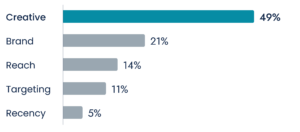
Figure 1. What drives incremental sales from advertising. Consumer goods campaigns, digital and TV. Source: NCSolutions (2023), via AdPipe.
Those were consumer brands, so a B2B company should treat the split as a guide. The direction still holds: what people see matters more than fine-tuning who sees it.
How Meta Ads uses your creative
Meta’s Andromeda system handles the first stage of choosing an ad. It narrows tens of millions of candidates to a few thousand before ranking begins. Agencies working with it, including Dentsu, report that it performs best with distinct creative concepts and that duplicating ads with small edits is no longer enough.
That advice comes from practitioners, and Meta’s own technical post does not cover it. It is cheap to test in your own account, which is the best evidence you can get.
Concepts first, then variants
A concept is a different reason to buy. A variant is a different way to show the same reason. You need both: an AdExchanger column points out that without diversity between concepts, variants become incremental tweaks that never change performance.
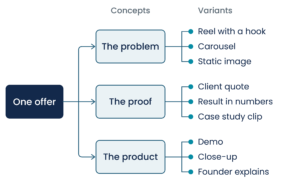
Figure 2. One offer, three concepts, then variants of each.
A creative testing process for Meta Ads
- Start with insight. Use sales calls, reviews and support tickets to find the words buyers use.
- Write three distinct concepts. Problem, proof and product is a reliable first set.
- Make two or three variants of each. Change the opening seconds, the format or the person on screen.
- Test fairly. Meta’s creative testing tool compares two to five ads with similar spend. Meta recommends giving the test no more than 20% of the budget, and the default run appears to be seven days.
- Judge on cost per result. Use qualified leads or sales. Ads expert Jon Loomer’s rule of thumb is about 50 optimised events in a week before you trust the result.
- Scale, record and refresh. Move budget to the winner, write down why it won and start the next test before results fade.
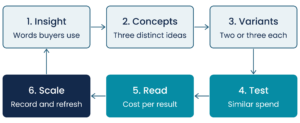
Figure 3. A creative testing loop for paid social.
If video is the bottleneck, plan one shoot to supply several tests. Our guide to corporate video for the B2B buying group shows how to plan many cuts from one day.
First-party data and privacy: what changes for advertisers
Are third-party cookies going away?
Not in Chrome. In April 2025 Google decided to keep its current approach to third-party cookies and dropped plans for a new prompt. In October 2025 it retired many of the Privacy Sandbox tools built to replace them, including Topics and Protected Audience.
Safari took the other route and has blocked third-party cookies by default since 2020. So cookie data is incomplete, and a plan that depends on it will miss part of your audience. First-party data, which people give you directly, avoids that gap.
India’s DPDP rules: the date to plan for
The Digital Personal Data Protection Rules were notified in November 2025 and take effect in phases. Consent manager registration opened on 13 November 2026. Most duties that touch marketing, including notice, consent and withdrawal, are due to start on 13 May 2027.
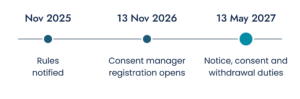
Figure 4. DPDP dates that matter to marketers. Source: India Data Law deadlines tracker.
Under the rules, as summarised for sign-up forms, you will need:
- A notice that stands on its own, listing the data you collect and why
- Consent by a clear action, limited to what that purpose needs
- Withdrawal that is as easy as giving consent
- Proof that you gave notice and received consent
A few guides give the final date as 12 May, and this is general information, so confirm your own obligations with a lawyer.
Consent-first data collection, step by step
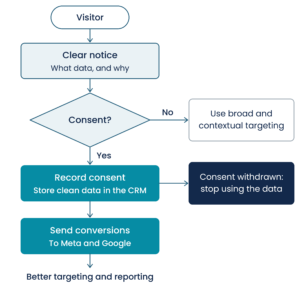
Figure 5. A consent-first data flow for paid ads.
Once consent is recorded, server-side tools can send conversions back to the platforms. Meta offers the Conversions API and Google offers enhanced conversions. Google says advertisers using enhanced conversions see an average 11% increase in Search conversions compared with standard conversion imports. That is Google’s own data from two weeks in January 2026, so treat it as a vendor figure.
Clean data practices
- Ask for less. Every form field needs a purpose.
- Use one naming system for campaigns, sources and lead stages.
- Remove duplicates and fix phone and email formats at entry.
- Pass back quality. Send qualified leads and sales to the platforms, because raw form fills teach them to find more form fills.
- Set an end date. Decide how long you keep each type of data.
This starts with your forms and tracking, so include it in any website development project.
Social commerce and short video in India
Where short video shapes buying
A Meta-commissioned Ipsos study of more than 4,000 people in India found 97% watch video on Meta’s platforms every day. Meta reports that Reels drive 81% product discovery, 66% consideration and 47% purchase influence among users. These are survey answers published by the platform itself, so they show influence and cannot be read as sales.
Shoppable Reels and YouTube Shopping
- Instagram: tags and links inside Reels arrived in India in April 2026. Viewers tap View Products to see details and price, then buy on the seller’s website. You need a professional account and a synced catalogue, and only physical goods qualify.
- YouTube: its Shopping affiliate programme launched in India with Flipkart and Myntra and has since added merchants including Amazon, AJIO and Meesho. Creators tag products and earn commission on sales.
- WhatsApp: many Indian buyers ask a question before they pay, so a quick reply belongs in the plan.
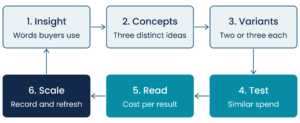
Figure 6. The path from short video to sale, and back to the next test.
How to make short videos that sell
- Show the product or result in the first three seconds.
- Make one point per video.
- Add captions, since many people watch without sound.
- Say the price, or who it is for.
- Match the product page to the video: same product, same offer, same words.
- Adapt for regional languages with native speakers.
Disclose paid creator content
In India, any material connection between a brand and a creator should be disclosed clearly, including gifts and barter. Put the label in the content itself and do not rely only on the platform’s tag.
What B2B companies can use
A machine or a software licence will not sell through a product tag. The method still applies: a 30-second demo, a clear next step, a landing page that matches and a consented lead form. For how long B2B decisions take, see planning a 2027 B2B marketing budget.
A 60-day paid social plan
Days | Creative | Data | Commerce |
1–20 | Collect insight, write three concepts | Audit forms, tracking and consent wording | Fix product or landing pages |
21–40 | Run the first fair test | Record consent, connect server-side tracking | Tag products or add lead forms |
41–60 | Scale the winner, start test two | Send qualified leads and sales back | Brief two creators or film two demos |
What to measure
- Cost per qualified lead or sale, by concept
- Test win rate: how often a new concept beats your current best
- Consent rate: the share of visitors who agree, by form
- Matched conversions: how many real sales the platforms can see
- Video to product page rate, then product page to order
FAQs
How many ads should I test at once on Meta?
Meta’s creative testing tool compares two to five ads. Start with three distinct concepts. A small budget split across many ads rarely gives each one enough results to judge.
Is first-party data better than third-party cookies?
It is more dependable. Chrome still allows third-party cookies, but Safari blocks them by default. First-party data comes from the customer directly and works across browsers, provided you have proper consent.
When do India’s DPDP consent rules start for marketers?
Notice, consent and withdrawal duties are due to start on 13 May 2027, 18 months after the rules were notified. Check the current position with a lawyer before you act.
Can people buy directly inside Instagram Reels in India?
Viewers can tap product tags in a Reel to see details and price. The purchase is completed on the seller’s website, so a fast and matching product page is essential.
Does social commerce work for B2B?
Product tags suit physical consumer goods. B2B companies can use the same approach with short demos, matching landing pages and consented lead forms.
How Pixtornet can help with paid social
Pixtornet is a design and digital studio with teams in Chennai and Bangalore. We plan the creative, build the pages and run the campaigns:
- Paid campaigns and digital marketing: Google and social ads tied to leads and revenue, reported monthly
- Video production: demos, testimonials and short cuts for testing
- Website design and development: fast landing pages and forms
- Branding: a consistent look across every ad and page
Want a clear first test for your business? Book a free consultation